
Awake
Living alert to the dimensions of God’s presence (an excerpt from Chapter 6)

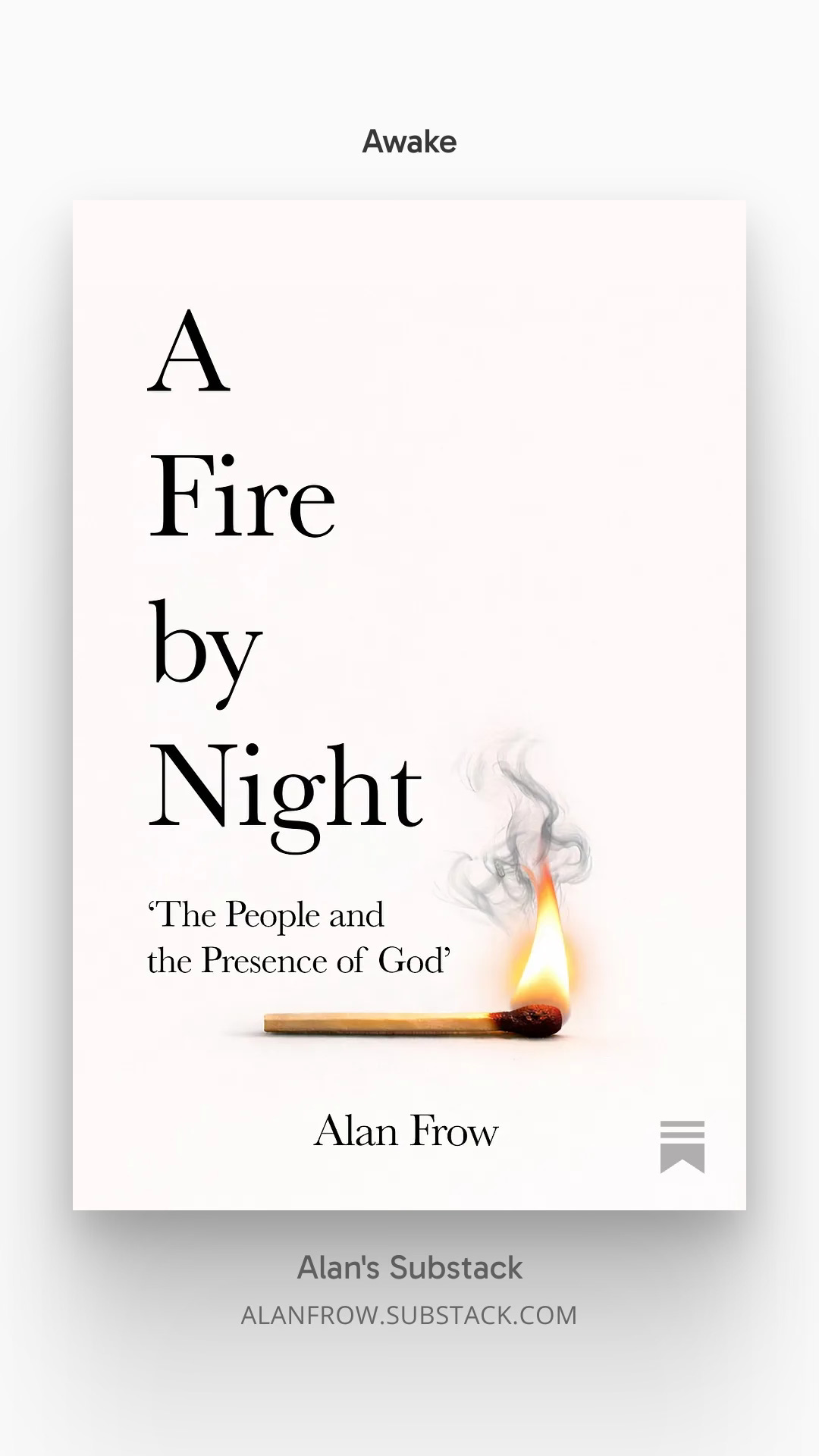
Now Moses was keeping the flock of his father-in-law, Jethro, the priest of Midian, and he led his flock to the west side of the wilderness and came to Horeb, the mountain of God. And the angel of the Lord appeared to him in a flame of fire out of the midst of a bush. He looked, and behold, the bush was burning, yet it was not consumed. And Moses said, “I will turn aside to see this great sight, why the bush is not burned.”(Exodus 3:1–3)
A book about the fiery presence of God would not be complete without some reference to Moses’ iconic encounter with God at the burning bush. This bush that was aflame without being consumed tells us something about the nature of God and His presence. God’s presence often comes to us in the wilderness seasons of our lives. God takes the initiative at peculiar times, often when we are not even seeking Him. Moses was tending to Jethro’s flock. He wasn’t praying or doing a Bible study or anything particularly spiritual when God spoke to him from the burning bush. This passage also illustrates that God’s presence is purposeful. Moses received a call from God to lead Israel like he led his father-in-law’s flock.
But the burning bush also tells us about what it is to be alert to God’s presence. Moses, though he was working, was curious enough about the bush to take a closer look. Moses obviously looked at it long enough to see that it was burning but not being consumed. That would have taken some time. Perhaps Jethro would have called Moses distracted. God saw him as attentive and curious.
“I will turn aside to see this great sight, why the bush is not burned.”
The saying goes, “Curiosity killed the cat.” In Moses’ case, curiosity commissioned the shepherd. He would never be the same: From that moment. Sent by God. To shepherd Israel.
Have you ever stopped to think that Moses may not have received his call from God if he had not been curious enough to stop working and go over to examine the bush? And would you consider that Moses may never have led Israel as they followed the spectacular firecloud if he had not been attentive to the less spectacular burning bush? I can hardly bear the thought of that, but it’s true.
Attentiveness to God is a hinge on the door of our callings.
The burden of this book is to call you to a greater expectation of encountering the palpable presence of God in your life and in the life of your church. That’s the brief. I hope the previous chapters have given you a greater hunger to contend for a greater sense of God’s dwelling and guiding presence among you and those with whom you journey.
But it is one thing to have an expectation and hunger for God’s presence. It is another thing to be alert to the myriad ways in which God presences Himself with His people. That’s what this chapter seeks to explore.
Of course, you and I may be forgiven for wishing we had as visible a way to recognize God’s presence as Moses did in the burning bush; or even more, as Israel did with the towering inferno by night and the swirling column by day.
How do we recognize God’s presence in our lives? Do we miss it because it is not always as dramatic or visible?Perhaps so. But perhaps it is not God’s presence that is the problem, but rather our spiritual inattentiveness.
Are we not like Jacob in Bethel who fell asleep and dreamed about a ladder, with angels ascending and descending on it? When he awoke, he exclaimed, “Surely the Lord is in this place, and I did not know it” (Genesis 28:16).
Are we not like the disciples, Peter, James and John, who nodded off during Jesus’ dramatic display of glory at His transfiguration? How could they possibly have been heavy with sleep in the midst of this heavenly sensory overload—Jesus shining dazzling white while talking with Moses and Elijah? (Luke 9:32) But sleep they did.
Most of us are not alert to the presence of God when it intersects our lives. This is why I am nervous of the kind of language in our church circles that goes something like, “God really showed up in worship today, didn’t He?”
Of course, I understand the sentiment. There are some gatherings in which God seems more present than others. But we must be careful that we do not minimize God to being a person who shows up on some occasions and fails to show up on others. That is not only irreverent. It’s unbiblical. In the words of John Piper, “God is always doing 10,000 things in your life, and you may be aware of three of them.” Let’s be humble enough to acknowledge that we are oblivious to the myriad ways in which God is showing up in our lives. The real issue is whether we are awake and attentive to what God is doing or whether we are asleep.
This is why I love the line in Elizabeth Barrett Browning’s narrative poem, Aurora Lee, as it calls us to be alert to God’s presence, referencing the vivid imagery of the burning bush.
Earth’s crammed with heaven,
And every common bush afire with God;
But only he who sees, takes off his shoes—
The rest sit round it and pluck blackberries.
Only he who sees takes off his shoes. It was because Moses saw the bush and heard the voice that he took off his shoes and received his call from God. Browning exhorts us to have eyes to see God’s fiery glory in every common bush. What does it mean for us to see every common bush on fire with God and therefore take off our shoes in reverent obedience?
I have witnessed, time and time again, two people in the same gathering come away with completely different experiences. One had a burning bush moment, leaving with a heart warmed and transformed, while the other left cold and unchanged, with no worthy takeaway save for an opinion of the worship and a score for the preacher. They picked blackberries! The only difference was that one had eyes to see the bush on fire with God.
As we reflect on what it means to recognize and respond to God’s presence as it intersects our lives in both common and uncommon ways, I want to lend some pastoral wisdom to questions that may arise about the different dimensions of God’s presence. I want to help you to realize that life is not just one extraordinary God-encounter after another. There are times when the consciousness of God’s presence may wane even as we seek it—just like in the passage when the cloud moved from in front of Israel to behind them (Exodus 13). God was with them, but in a less direct, visible manner. God’s distance did not mean His absence, which is a tremendously important truth for us to hold onto when we do not sense His nearness.
I want to help you realize that God’s presence can be meaningfully experienced in a myriad ordinary ways and in multiple dimensions. Mostly, I want to help you to live alert to His presence in a posture of reverence and attentiveness.
Most of us want to feel God’s presence deeply, but are we ready to think more deeply about it? I hope so.
Most theologians agree that God’s presence can be categorized in three major dimensions:
Omnipresence: that God is present everywhere in His creation
Indwelling presence: that the believer is able to remain in God’s presence because of God’s indwelling Spirit
Manifest presence: that God’s presence is at moments experienced in more observable ways
These categories are Biblically sound and helpful, but perhaps overly simplistic. Categorizing mystery can be dangerous work—if it means we lose the wonder of God’s presence. Like pulling petals and stamens from flowers to name them—you can so easily lose the beauty of the bloom itself. Moreover, categories are often too watertight. God’s presence bleeds over into different categories. For instance, His indwelling presence enables us to recognize and respond to His manifest presence. So, I prefer to speak more of dimensions of God’s presence than categories. Yet, if categories help us to remain awake to God’s presence, then it is worthwhile work. Having studied and pondered, I propose we expand these 3 larger categories into 7 dimensions of God’s presence—before we think about how to engage personally with God’s presence.
i. Omnipresence
The first dimension in which humans may recognize God’s presence is what theologians call “omnipresence.”This means that “the God of the Bible is everywhere at once.” While some places seem to be more sacred and others more wicked—theologically, there is no God-forsaken place. God first inhabits everything and holds all things together (Colossians 1:17). He is everywhere. He is the glue that holds His creation in place. King David celebrates God’s omnipresence in this beloved and often quoted Psalm.
Where can I go from your Spirit?
Where can I flee from your presence?
If I go up to the heavens, you are there;
if I lie down in the grave, you are there.
If I rise with the sun in the east
and settle in the west beyond the sea,
even there your hand will guide me,
and your right hand will hold me.(Psalm 139:7–10)
The psalmist does not necessarily insist that he feels God’s palpable presence everywhere. He simply accepts by faith that Yahweh’s omnipresence is inescapable, and so should we.
C.S. Lewis’s perspective on God’s inescapable omnipresence is simply breathtaking.
We may ignore, but we can nowhere evade the presence of God. The world is crowded with Him. He walks everywhere incognito. And the incognito is not always hard to penetrate. The real labour is to attend. In fact, to come awake. Still more, to remain awake.(C. S. Lewis, Letters to Malcolm: Chiefly on Prayer (San Diego: Harcourt Brace Jovanovich, 1964), 75.)
It is a real labor to be attentive and to remain awake to God’s presence because it is not always spectacular. Our culture is addicted to the spectacular and often overlooks the subtle, incognito glory of God disguised in the common. Furthermore, the unholy trinity of the world, the flesh and the devil seek to lull us into spiritual dullness to God’s glory, blinding us with temporal glories. The stars above a cityscape at night are no less bright than they are above a country landscape. They simply appear less bright because they are dulled by the lesser glory of electric light. Similarly, the world’s light can work to dull the true glory of God above us and among us. This is why we need the lamp of God’s Word to remind us that whether we see it or not, God is indeed omnipresent.
ii. God’s presence in creation
Scripture is full of references about how we can experience His presence through His creation. We have all had these experiences of wonder—watching a sunset over the ocean, hiking through a rainstorm in a forest, or staring up at a sunrise over a mountain range.
The psalmist declares that “The heavens are telling of the glory of God. Day by day they pour forth speech”(Psalm 19:1–2).
John Calvin, the great 16th century reformer, wrote of the witness of God’s presence in creation.
“Yet, in the first place, wherever you cast your eyes, there is no spot in the universe wherein you cannot discern at least some sparks of his glory… this skillful ordering of the universe is for us a sort of mirror in which we can contemplate God, who is otherwise invisible.”
Creation makes visible the Creator’s invisible attributes. It is a signpost pointing to His reality, so that people would honor and worship Him, rather than worship creation itself. (Romans 1:20)
British poet Steve Turner wrote with razor-sharp wit about how creation bears witness to the presence of God, thwarting our doubts about God’s existence in his poem, “Untitled”.
We say there is no God (quite easily)
when amongst the curving
steel and glass of our own proud creations.
They will not argue.
Once we were told of a heaven
but the last time we strained to look up
we could see only skyscrapers shaking their heads and smiling no.
The pavement is reality.
We say there is no God (quite easily)
when walking back through
Man’s concreted achievements
but on reaching the park
our attention is distracted
by anthems of birds coming
from the greenery.
We find ourselves shouting
a little louder now because
of the rushing streams.
Our voices are rained upon by
the falling of leaves.
We should not take our arguments
for walks like this.
The park has absolutely no manners.
God’s creation yells at times and whispers at others, the rumors of His presence.
It is difficult to spend time in nature for long without sensing something of the Creator’s wisdom and grandeur leaking through, raining on our parades of doubt and skepticism.
(To receive the complete chapter leave a comment below )
And like to hear more .